Who do we build for?
Who we build for is critical to how we shape the future of Lucrii, and ensuring we remain alive. It is important to acknowledge that an ICP is not fixed - it is fluid and ever evolving. Ensuring your ICP evolves alongside your product and customer base is just as important for survival as recognising your ICP in the first place.
What is an ICP and how do we define it? It is our Ideal Customer Profile (the company) and Persona (the actual people using the product). Put simply, it is who we believe is the best fit for Lucrii and our current core focus customer.
Our Current ICPs:
Note on plural above. Lucrii is currently a pre-customer, start-up. We’re building this tool based on our experience in small-medium businesses across both service based and goods based businesses. The truth is, we just don’t know who will take to Lucrii the fastest or the best at this stage, and it would be arrogant of us to assume we know best without getting customer feedback.
We have a good idea on who is best suited for Lucrii and until the market tells us otherwise, we’re going to knuckle down here.
Marketing and customer success should focus 70% on Growing SMBs (they pay the bills) and 30% on Early-Stage Founders (they’re tomorrow’s high-value customers). The early-stage ICP should get great product and support but at a price point that reflects their stage - we’re investing in the relationship, not expecting immediate high revenue.
What This Means Operationally
Growing SMB (70% of resources)
- Priority onboarding support
- Faster response times
- Proactive check-ins
- Premium features first
Early-Stage Founders (30% of resources)
- Self-serve onboarding
- Community + email support
- Educational content
- Clear upgrade path as they grow
| The Growing SMB | |
|---|---|
| Description | Businesses that are actively experiencing pain from fragmented systems. They have revenue, paying customers, and a team - but their operational infrastructure hasn’t kept up with growth. |
| Criteria |
|
| Why they matter? |
|
| Example |
|
| Success Metrics |
|
| The Early-Stage Founders | |
|---|---|
| Description | In their first 12-24 months who are setting up proper systems before things get messy. |
| Criteria |
|
| Why they matter? |
|
| Example |
|
| Success Metrics |
|
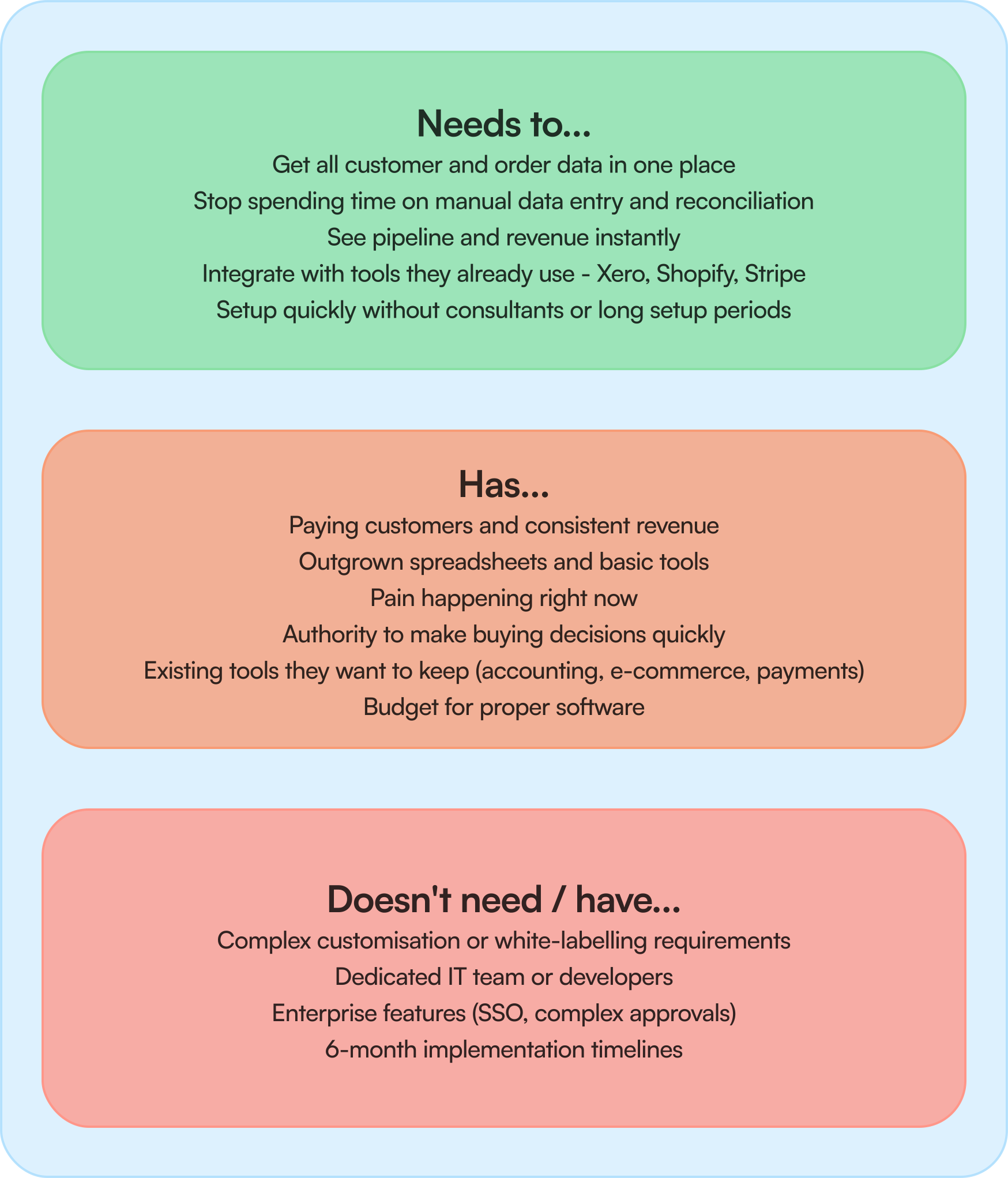
Our Real ICP
We’re not new to this. We know it’d be naive to assume the above is 100% rock solid - that’s why all that matters right now is the following:
How We’ll Know If This Is Right
Good signs:
- Sales cycles <3 weeks
- Onboarding completion within first week
- Daily active usage within first month
- Low churn (<5% monthly)
- Customers describe us as “exactly what we needed” not “interesting”
Bad signs:
- Long sales cycles (>4 weeks)
- Customers using it once then disappearing
- Describing us as “cool” but not using it
- Asking for deep customisation
- Churning within first 3 months
What We’ll Do Next
- Get first 5 paying customers from either ICP
- Weekly check-ins for first 3 months
- Track which ICP activates faster and retains better
- Refine criteria quarterly based on actual data
- Be ready to pivot if a third ICP emerges. We’ll know we’ve nailed it when we can identify our ideal customer in 30 seconds and close them in under 2 weeks.
What We Don’t Build For (Non-ICP)
- Enterprise Corporations (500+ employees) - Too large, need enterprise features we don’t provide, have formal procurement, use SAP/Oracle/Salesforce already.
- Customisation Specialists - Want to build deeply customised systems with technical teams. We’re out-of-the-box, not a dev platform.
- International-First Businesses - Primarily operating outside Australia needing multi-currency and international compliance as core features, not nice-to-haves.
- Mature Mid-Market (100-500 employees) - Already have established systems, need enterprise features, formal vendor evaluation, and implementation timelines we don’t support.
If you made it this far, thank you for reading (+20XP)